
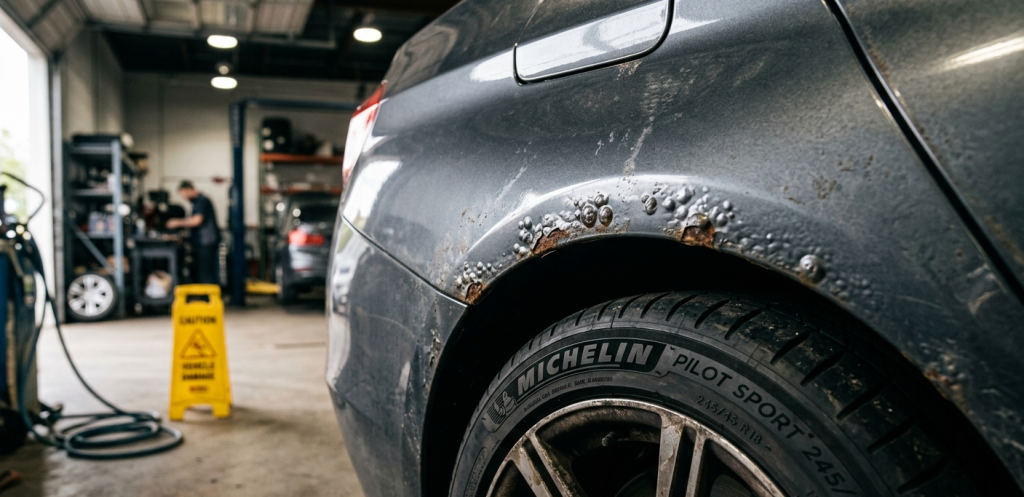
A tiny bubble may be spotted on the arch of your wheel, a brown stain is seen around the edge of a door, or a small area of paint is seen to be raised around the chip on the bonnet. Most of the time, these things are neglected by people as they think they will do it soon. However, the process of rusting becomes more rapid than one could ever think, as soon as the paint is broken in Sydney and other coastal areas.
A small cosmetic problem can turn pretty soon into a very expensive, structurally unsafe, and perhaps even very difficult to fix problem. In the article that follows, we will decode the real meanings behind these tiny bubbles, demonstrate how rust goes from a hidden issue to a serious problem with the structure and finally, tell you why getting early rust repairs by professionals is far cheaper than leaving it to fester.
What Those “Little Bubbles” Actually Mean
Generally, rust isn’t a problem growing in modern cars anymore. That’s why rusts aren’t a problem anymore in modern cars. Galvanised steel is used for metal panels, and the metal is painted with primers, sealants, and a final clear coat to keep the area dry. Normally, these coatings do a wonderful job.
A small bluster or bubble on the paint? Usually, these are not the only things that need to be treated. Almost always, it indicates that water has found its way through the coating, and rust is taking place from within the metal.
The first and typical signs of rusting are quite easy to see: small bubbles located at the edges of the wheel arches, the paint getting loose near the stone chips on the hood, or brown spots showing up at the bottom parts of the doors and tailgates.
The area of difficulty is that the damaged portion that can be seen is often just a small part of the entire rusted area. If a bubble is seen on the top layer, then the underlying rust patch is likely to be much bigger than expected.
From Surface Rust to Structural Damage
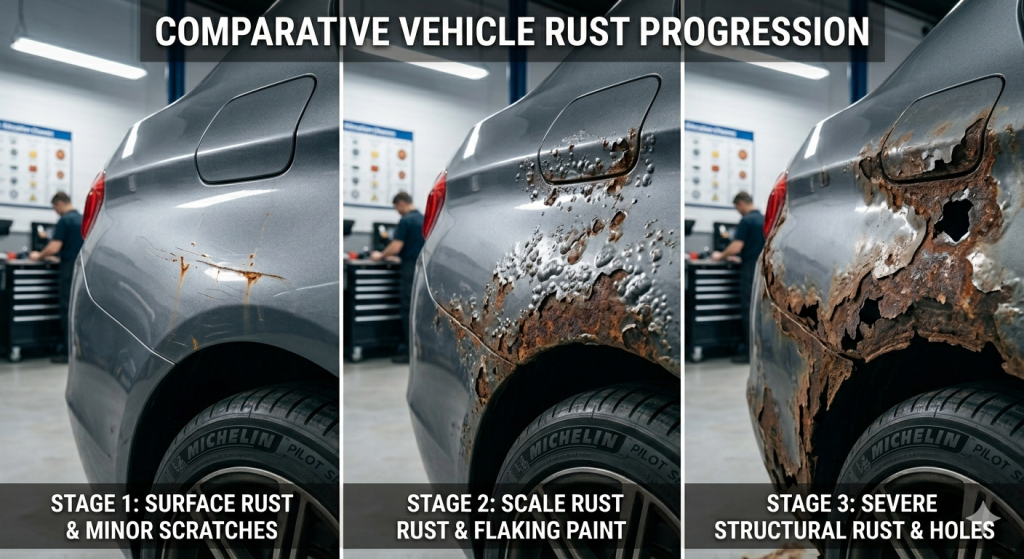
- Surface rust is the very first stage of the process. You will notice metallic areas, colour fading or tiny holes forming on the surface of the exposed metal. Most of the time, it is just a matter of sanding, applying a rust inhibitor, spraying primer on the nearby area and making it look as good as new.
- Scale rust comes next, and it is more serious. The metal starts to lose its toughness, and bad pitting goes much deeper. Repair work often at this time involves cutting back the area until strong metal is reached and then putting in tiny patches to be painted over.
- The main issue is structurally compromising rust, which is the most severe. What has happened here is that the car’s metal parts, including sills, chassis, suspension, or even the floors, have been completely eroded, leading you to have a car with a poor interior plus external body rust all over.
The untreated rust will keep spreading since water, sea, or road salt, and dirt will keep creeping under the paint and seam sealants further. Every cycle of moisture removal makes corrosion take place faster, which in turn makes a small issue a major headache.
The downside is not only of aesthetics. Rust might be the reason your car fails a pink slip or rego inspection in NSW, while weakened sills or pillars mean reduced occupant protection in case of an accident.
Why Early Rust Repairs Are Cheaper
- The prompt detection of rust leads to a significant reduction in both cost and hassle. A small job is quite simple: the area is affected, then it is sanded or ground to metal, after that, a rust converter or inhibitor is put on, and finally, it is primed, sealed, and painted again. Fast, neat, and completed before the spread of the problem.
- If you wait too long, you will have to deal with much bigger repairs. You may have to remove large sections where there is rust, and then fabricate or fit replacement panels, weld them in place, seal, prime, and paint a much larger area. The labour and materials costs will shoot up as soon as rust gets into seams, inner guards, or structural components. What might have been a few hundred dollars can very easily become thousands if entire arches, sills, or tailgates need to be reconstructed and fully resprayed.
- Early repairs are not only cheaper but also conserve the resale value as well. Rust is a major drawback for buyers and inspectors. Cars with clean, rust-free bodywork not only look better but also get a stronger price. Dealing with rust while it is small keeps your car safer, your wallet happier, and your future sale smoother.
Rust Hot Spots Commonly Found on Australian Cars
Rusty parts are everywhere in a car, but it’s more evident in Sydney. The GIA experts often see rust in these spots:
- Wheel arches and rear quarter panels – traps of mud, along with the stone chips, turn these places into prime rust areas.
- Bottom edges of doors and tailgates – the combination of blocked drain holes and crevices filled with moisture leads to rusting that is slow but steady.
- Windscreen surrounds and roof gutters – the old sealant or previous glass replacements might have allowed the water to penetrate, thereby initiating the corrosion under the paint.
- Boot floors and spare wheel wells – the leaking seals and the water trapped in these areas render them surprisingly vulnerable.
Local weather and conditions are not helpful. Coastal air, regular beach trips, and old cars parked outside all year round increase the risk. Rust can be very small at first, but then quickly spreads, often in locations that are not immediately visible.
A prompt self-inspection can prevent a lot of later hassles. Be vigilant and look for the signs of rust-hotspots, such as bubbling, flaking, or brown streaks. Early detection of rust means smaller, cheaper repairs and a lot less stress down the road.
When to Book Professional Rust Repairs – And What GIA Can Do
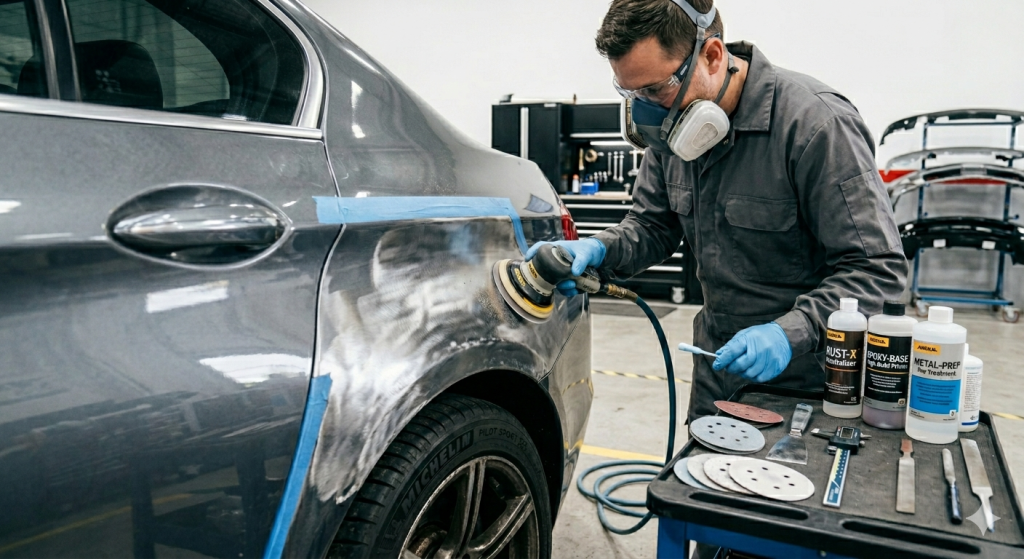
As soon as you notice auto body paint bubbling, chipping, or brown rolling, it’s a signal to book a professional inspection; don’t wait until you can stick a finger through the hole. Rust is one of the problems that gets worse as time passes.
Rust is no joke to GIA Smash Repairs. We handle it by assessing the damage properly, removing the infected area, and putting in new metal when necessary, then applying rust protection, repainting, and blending the area so it matches and lasts the same as the rest of the car. Besides, we can easily couple rust repairs with dent work, resprays, or detailing to minimise downtime and make the expenses reasonable.
In case you doubt how serious the situation is, drive your car to GIA Smash Repairs in Five Dock or send us a couple of photos for an initial opinion and damage assessment.